Magnetic Resonance Imaging (MRI) is a crucial diagnostic tool used by medical professionals worldwide to view detailed images of the inside of the body. However, for many, the thought of having an MRI evokes feelings of anxiety and stress. The traditional MRI process can be daunting, especially for those who suffer from claustrophobia or have experienced an MRI scan that left them feeling uncomfortable or trapped. Fortunately, with advancements in medical technology, open scanners have emerged as a revolutionary option, offering a more comfortable experience and potentially diminishing the anxiety associated with MRI scans.
This article explores the role of open scanners in alleviating MRI anxiety, their benefits over traditional MRI machines, and how they represent a pivotal advancement in patient-centered care. By prioritizing patient comfort and accessibility, open MRI scanners ensure that individuals needing diagnostic imaging can face the process with greater ease and confidence.
Understanding these technologies’ functionalities and advantages can aid medical professionals in making informed choices for their patient’s mental and physical well-being.
Understanding Open Scanners
Open MRI scanners differ from traditional closed MRI machines mainly in their structural design. Closed MRI machines feature a narrow, cylindrical tube which patients are required to lie inside during the procedure. In contrast, open scanners have a more spacious, less confining structure, often with open sides or a wider bore that allows patients to see and feel more connected to the scanning room and their surroundings. This feature significantly reduces feelings of confinement, making the process far less intimidating.
Another important aspect of open scanners is their versatility in accommodating patients. These machines can handle individuals of all ages, sizes, and weights, addressing one of the biggest limitations of traditional MRI machines. Open scanners provide ample room for patients who may be overweight, ensuring their body would comfortably fit without feeling squeezed or restricted. This inclusive design enables a wider range of patients to undergo essential imaging tests safely and comfortably, thereby contributing to more comprehensive healthcare.
Open scanners are not just beneficial for individuals with size concerns or claustrophobia. They are also particularly useful for scanning patients with mobility issues, who might otherwise struggle to remain still, or those who require constant assistance from caregivers. This ease of access allows patients to relax more easily during scanning, which can lead to higher quality images and more accurate diagnostics. Ultimately, open scanners enable a more patient-friendly practice, where the focus is on overcoming barriers that might prevent important medical evaluations.
The Benefits of Open Scanners Over Traditional MRI Machines
One of the primary advantages of open scanners is the heightened level of comfort they offer to patients. With the capacity to alleviate feelings of claustrophobia thanks to their open design, these machines create a more hospitable scanning environment. Patients often report feeling less anxiety, as they don’t feel completely enclosed like in a traditional MRI machine. Moreover, the decrease in noise levels during the scanning process is another key benefit, significantly reducing auditory distress and aiding relaxation.
The open design of these scanners also facilitates better communication between the patient and the MRI technologist. This improvement in patient-technologist interaction further enhances the overall experience by allowing for real-time dialogue, reassurance, and guidance throughout the procedure. This accessibility can result in shorter scan times due to the increased ease of collaboration and patient compliance, optimizing the quality of the diagnostic images obtained.
Furthermore, open scanners are especially beneficial in pediatric applications. Children, who often struggle with staying still due to fear and apprehension, benefit from the calming environment that open MRI machines provide. Besides, the increased ability to accommodate the presence of a parent or guardian contributes immensely to alleviating a child’s anxiety. This not only enhances the child’s comfort but also increases the chances of securing precise imaging, which is vital for accurate diagnosis and treatment planning.
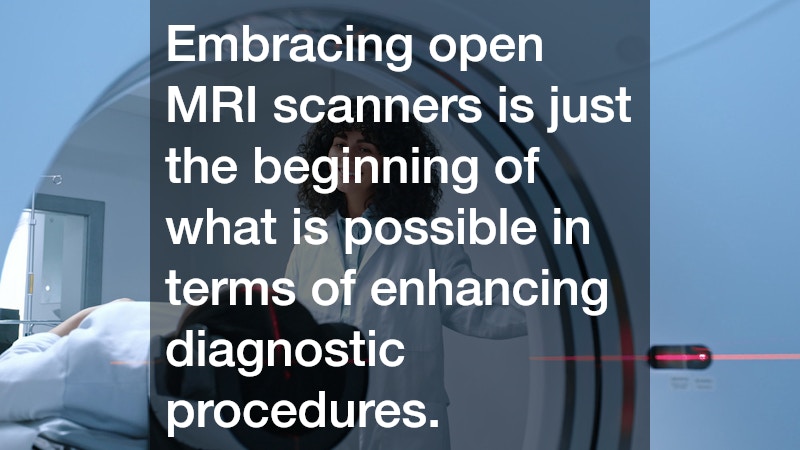
Embracing open MRI scanners is just the beginning of what is possible in terms of enhancing diagnostic procedures. As the technology continues to evolve, further innovations are expected that will make medical imaging even more patient-centered and responsive to individual needs. Ultimately, open scanners have already demonstrated a positive impact, shaping a future where healthcare accessibility and comfort are at the forefront of patient care practices.