
Trying to eat healthy doesn’t mean you have to cook every meal at home or turn down invitations to dine out with family and friends. Many people assume that sticking to their health goals requires giving up restaurant meals entirely, but that mindset often leads to frustration and all-or-nothing thinking. The truth is that with a few practical strategies, you can enjoy eating out regularly while still honoring your nutrition and wellness priorities. This article breaks down simple, realistic ways to make dining out a tool for your health goals rather than an obstacle to them.
Plan Ahead Before You Arrive
One of the easiest ways to stay on track when eating out is to look at the menu before you even step through the door. Most restaurants post their menus online, which gives you time to identify a few options that align with your goals without the pressure of deciding on the spot. This small step removes a lot of the guesswork and impulse decision-making that often happens when you’re hungry and scanning a menu for the first time.
Planning ahead also helps you figure out portion sizes and whether you might want to split a dish or box up leftovers. If you know you’re heading somewhere with larger portions, you can mentally prepare to eat half and save the rest for later. This simple habit keeps you in control of the meal instead of letting the plate size dictate how much you eat.
- Check the restaurant’s website or app for nutrition information
- Decide on a protein and vegetable option ahead of time
- Consider eating a small snack beforehand if you tend to arrive starving
- Look for menu sections labeled lighter fare or chef’s specials
Choose Preparation Methods Wisely
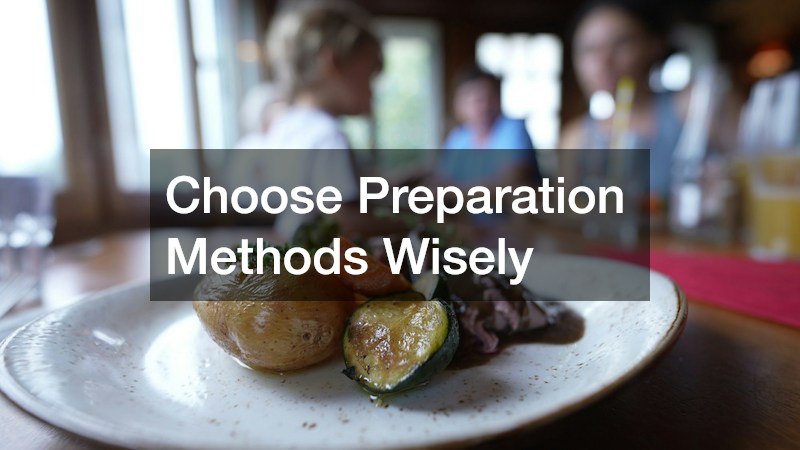
How a dish is prepared often matters more than the ingredients themselves. Grilled, baked, steamed, and roasted items generally contain less added fat than fried or breaded options, so scanning the menu for these cooking terms can guide you toward better choices quickly. Sauces and dressings are another hidden source of extra calories, so asking for them on the side gives you control over how much you use.
It also helps to pay attention to how dishes are described, since words like crispy, creamy, or smothered usually signal higher calorie counts. Don’t be afraid to ask your server questions about preparation methods if the menu description is unclear. Most restaurants are happy to accommodate simple modifications, like swapping fries for a side salad or steamed vegetables.
- Favor grilled, baked, roasted, or steamed over fried or breaded
- Request sauces and dressings on the side
- Ask about substitutions for sides like fries or chips
- Watch for descriptive words that hint at hidden calories or fat
Practice Portion Awareness at the Table
Restaurant portions have grown significantly over the past few decades, and many servings are large enough to feed two people comfortably. Rather than feeling obligated to finish everything on your plate, give yourself permission to stop eating when you feel satisfied rather than stuffed. Paying attention to your body’s hunger and fullness cues is one of the most effective long-term strategies for managing weight while still enjoying a wide variety of foods.
A useful trick is to ask for a to-go box early in the meal and set aside half the dish before you start eating. This way, you’re not tempted to keep picking at food that’s already in front of you. Sharing an entree with a dining companion is another simple way to naturally control portions without feeling like you’re missing out.
- Box up half your meal before you start eating
- Eat slowly and check in with your hunger levels throughout the meal
- Share larger entrees or appetizers with others at the table
- Skip the bread basket if you know a large meal is coming
Balance Your Plate With Variety

A balanced approach to eating out means thinking about your plate the same way you might at home, with a mix of lean protein, vegetables, and whole grains when possible. This doesn’t mean every meal needs to be perfectly balanced, but aiming for variety over the course of a week helps offset the occasional indulgent meal. Ordering a side salad or extra vegetables alongside your main dish is an easy way to add nutrients and fiber without much effort.
It also helps to think about what you’ve eaten earlier in the day when choosing a restaurant meal. If your other meals have been lighter, you have more flexibility to enjoy a richer dinner option without feeling guilty. This kind of balance over time, rather than perfection at every single meal, is what actually supports lasting health goals.
- Aim to fill at least half the plate with vegetables when possible
- Choose whole grains like brown rice or quinoa when offered
- Add a side salad to boost fiber and nutrients
- Think about your whole day’s eating pattern, not just one meal
Seek Out Restaurants That Support Your Goals
Not all restaurants are created equal when it comes to supporting healthier eating habits, and seeking out some of the best restaurants in your area for nutritious options can make the entire process easier. Many cities now have directories, apps, and review sites that highlight establishments known for fresh ingredients, customizable menus, or transparent nutrition information. Taking a few minutes to research before choosing where to eat can save you from feeling stuck with limited options once you’re already seated.
Look for restaurants that offer a range of preparation styles and are willing to accommodate dietary preferences, since this flexibility makes it much easier to stick to your goals without sacrificing enjoyment. Reading reviews from other health-conscious diners can also point you toward hidden gems that might not advertise themselves as health food spots but still offer plenty of nutritious choices. Over time, building a go-to list of reliable restaurant options takes the stress out of deciding where to eat on busy nights.
- Use apps or local guides to find restaurants with customizable menus
- Read reviews mentioning fresh ingredients or healthy modifications
- Save a short list of reliable spots for busy weeknights
- Ask friends or family for recommendations based on their own experiences
Enjoy Social Meals Without Losing Momentum
Eating out is often about connection with family and friends, not just the food itself, so it’s worth remembering that one meal won’t derail your overall progress. Stressing excessively over a single dinner can actually do more harm than the meal itself, since it can lead to feelings of guilt or an all-or-nothing mentality. Instead, focus on enjoying the company and the experience while making reasonably mindful choices where you can.
Getting back to your regular habits at the very next meal is far more important than trying to achieve perfection during a night out. This flexible mindset helps you sustain healthy habits long term without feeling deprived or resentful of social occasions. Remember that consistency over weeks and months matters far more than any single dining experience.
- Focus on the social experience rather than only the food
- Avoid labeling meals as entirely good or bad
- Return to your normal eating pattern at the next meal
- Practice gratitude for shared time with loved ones over strict rules
Eating out doesn’t have to be at odds with your health goals when you approach it with a little planning and a flexible mindset. Small habits like reviewing menus ahead of time, paying attention to portion sizes, and choosing preparation methods wisely can make a real difference without sacrificing enjoyment. The next time you’re deciding where to go for a family dinner or night out with friends, try putting one or two of these strategies into practice and notice how much easier it becomes to stay aligned with your goals.